As you may now be dying
to know how much of life is left,
you may rest
assured that when you are dying for good,
the wrong life won’t flash before your eyes.
Category: poetry
The Everything box
I wish I had opened the nothing box
just once in my lifetime
(committing to never close it).
It could even stay ajar.
But I’ve been thinking outside that box—
Now the box I’m in might overflow.
Between Midnights
What’s your favorite time of day
The dead of night and the light of day. To put it better, it spans from twelve-oh-one to midnight—call it a day. The missing minute? That is pure leisure. 😎
An Exciting Childhood. Oh, wait
What TV shows did you watch as a kid?
A very few, if any, that I could persuade my mother to let me watch, instead of her soaps or the like. And being limited to broadcast TV, we only had four or five channels, so…
I remember watching Ed, Edd n Eddy and Doug, for instance. But it could be that I actually watched them a little older; aphantasia affects my memory recall a bit. Oh yeah, what an exciting childhood…
Anime shows: Saint Seiya, Yu Yu Hakusho, Dragon Quest: The Adventure of Dai, Legend of Heveanly Sphere Shurato, and Dragon Ball Z.
I first watched Dragon Ball Z with my cousins at my aunt’s house.
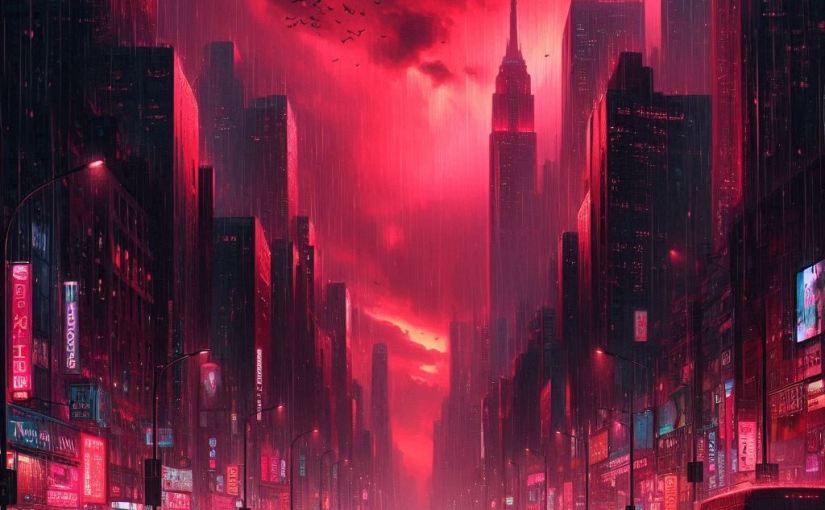
Red Sky
Gazing at this crimson sky,
— it seems a mirror —
Of the blood-soaked earth,
Spoils of that war…
And the rain is precipitated
It can hardly wait to fall…
Washing the soil,
like cleaning a sidewalk,
that dirties as it dries.
Adapted from:
Céu vermelho
Olhando, este céu vermelho
— parece espelho —
Do sangue desta terra,
Espólio dessa guerra…
E a chuva precipita-se,
Mal espera pra cair…
E lava o solo,
como quem lava a calçada,
que suja-se ao passo que seca.

How I Format Poetry with inline CSS
Poetry looks beautiful in books, but how does it fare on websites?
To date, we haven’t found a sensible way to format poetry online. What do we do when our verses are so long that they spill over to the next line? How do we visually cue the reader that the continuation is part of the same verse and not a new one? We solve this by indenting the overflow to the right. That’s what’s called hanging indent. Read https://epubsecrets.com/well-hung-poetry-ebooks-and-indents-part-one.php for additional context.
General guidelines suggest using the <p>
tag for paragraphs and the <br> tag to break the paragraph into verses when formatting poetry with CSS. However, here I use the <span> tag for verse separation instead of the <br> as it provides more freedom to style the verses.
For the desired effect, I use three CSS properties: ‘padding-left’ and ‘text-indent’ for the <p> tag and ‘margin-left’ for the <span> tag. Here, I apply 3em of space.
The ‘padding-left’ property sets the space between the content and the left border, while the ‘text-indent’ specifies the indentation of the first line in a text-block. I then use the ‘margin-left’ to indent the other lines of the text-block.
To illustrate how the css code would look:
<h2>So you sit to write</h2>
<p style=”padding-left: 3em; text-indent: -3em;”>You are well versed on how this single verse works
<span style=”margin-left: -3em;”>An added verse and that’s a whole nother story</span>
<span style=”margin-left: -3em;”>These ‘oneliners’ need to talk to each other</span>
<span style=”margin-left: -3em;”>At times they just need to listen to themselves</span></p>
This produces the following output:
So you sit to write
You are well versed on how this single verse works
An added verse and that’s a whole nother story
These ‘oneliners’ need to talk to each other
At times they just need to listen to themselves
I recommend reading this in a browser (that’s where you should read this blog) to see how it works, and avoid using the Jetpack app reader. Otherwise, my verses might lose impact because I vary the way I structure them, and you might miss the clear separation scheme I intended for a particular poem. Sometimes, they might even look messy due to the app’s built-in styling choices.
If you’re on a mobile device, I suggest you try portrait and landscape page orientation to see how it affects the reading experience. As long as you read in a browser, it should look fine both ways.
I’d love to hear your thoughts on how poetry formatting works best for you online. Your feedback is invaluable in refining these approaches and making poetry more accessible and engaging in the digital realm.
Feel free to leave a comment and join the conversation!
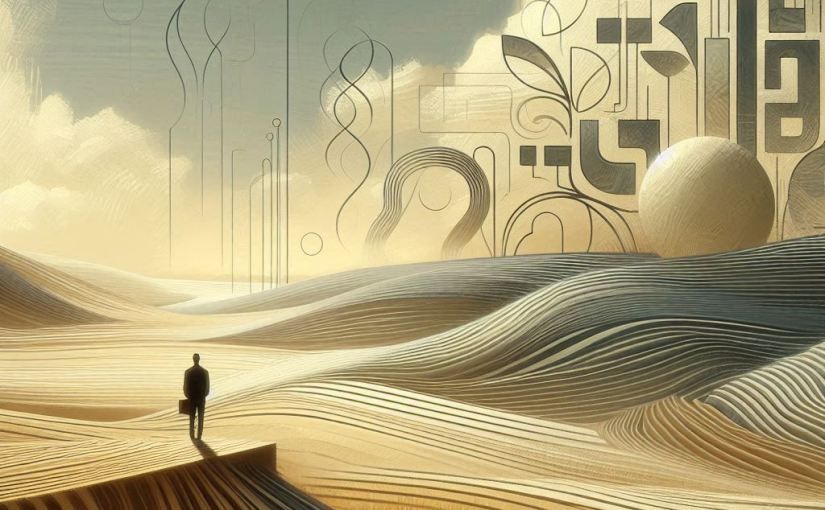
A Words’ World
I’ve updated the anthology to include this new poem.
There lived an okay poet, a man of his word.
No one lived happily ever after.
Before them, an okay life — stretched out.
Like poet, like audience.
The okay poet said, “it’s okay to be sad.”
I wouldn’t go that far as to go gentle into the night.
Far be it from me to run away from the set of conditions.
Yet I wouldn’t be caught between a rock and a hard place.
Isn’t it okay to be great?
The Words’ Word shapeshifts before these words.
Open Letter to an Introvert Poet
Hey, wanna talk?
You’re not all about the prose, all smiles, I get it.
You may tell me your p – o – – e m s.
Let me fix you a coffee.
Hmm, I should’ve offered it sooner.
Like, this strophe’s opening verse
belongs in the second line, first strophe, right?
You do this poetry thing so well,
I didn’t even know where to start.
Coffee is your cup of tea; mine too.
Remember that poem you wrote about it?
By the way, you’ve written a lot.
Tell me your p – o – – e m s.
State your dilemmas.
I don’t wanna force a friendship,
I just wanna reach you out.
This may be the only way.
Those latest verses… Are you in pain?
Was that your lyrical or physical self?
Were they a cry for help?
Talking’s tough, I get it.
You can write to me instead.
Sure, I’ll pay more attention to your next verses.
You’ve decided to talk. That’s great.
Could we talk in private?

Anthology Reveries that I call Poetry | by T!el Fajardo
Since I have some time now, I’ve put together this anthology for you all. If you think my effort is worth it and the quality is good, feel free to buy me a coffee, there’s a button at the end too. Feel free to share this post and comment too.
I’ve also added a few extra poems that you might not have seen before.
How This Works
I’m testing an intricate idea here. This post is a single post with a collection of poems separated by pages (you might see page breaks depending on where you are reading this), with chapters and titles organized by the appropriate headings (no hyperlinks). Call it my postfolio; it’s a post analogous to a book.
Introduction
Welcome to a journey through language, writing, and the metatextual world of poetry. We’ll explore how language can be both a creative tool and a barrier. From the playful frustration of crumpled drafts to the powerful imagery of ink and blood, these verses challenge traditional forms, blending free verse with deliberate constraints.
The author
Pages: Page 1, Page 2, Page 3, Page 4, Page 5, Page 6, Page 7, Page 8, Page 9, Page 10, Page 11, Page 12, Page 13, Page 14, Page 15, Page 16, Page 17, Page 18, Page 19, Page 20, Page 21, Page 22, Page 23, Page 24, Page 25, Page 26, Page 27, Page 28, Page 29, Page 30, Page 31, Page 32, Page 33, Page 34, Page 35, Page 36, Page 37, Page 38

Exploring the Challenges of a Nonet to Summarize the Challenges of Poetry in General
As poets or creative writers in general, we often embrace constrained writing, with its self-imposed limits. While writing freedom is cherished (even considered paramount), constraints can spark creativity, whereas absolute freedom, without a critical intuition for what makes good writing—especially in poetry—can have the opposite effect.
To explore constrained writing, poets have developed various forms, like the nonet. Some forms are more justified than others (well-accepted by poets and readers of poetry), as certain structures may become too rigid, potentially suffocating emotion and meaning.
While constrained poetry often focuses on syllable count, word count can be an equally intriguing challenge. My poem ‘Ink Over Blood,’ the first I wrote seriously in English, plays with this concept. Here I transcribe it, but please follow the link and read it in its original post:
Ink Over Blood
Rain down the reign
Wash away royal blood
The old king’s dead
Long live, new king
Provided the kingdom remainsGold rule, dark days,
Poet lies, folk sway.
Word wars, fake lore,
King dead, none lead.See, these four-word verses
Like the four-letter words
Picture a wicked world;
Curse all the kings
For the poet’s takeover.
[The poet takes over.]
This poem remains a personal favorite of mine, as it represents a significant moment in my writing journey. But let’s return to the main point: demonstrating the challenges of constrained poetry, specifically the nonet—a form that, while deceptively simple, presents significant challenges.
This form highlights the tension between freedom and restraint, and I take avantage of the opportunity to raise a question about what truly makes good poetry. Is poetry, and creativity at large, ever truly free from constraints?
Hear me out, ‘mnot saying it out loud
I’d rather whisper it to you
It’s not a word for this crowd
Pack it up everyone
Go and have some fun
Oh, you’re still here
Expecting
Something
Big?
Some might see this arrangement as clever—I would not call it a solid poem—, but it’s important to acknowledge the difficulties presented by the form and this piece’s deficiencies. The nonet’s rigid structure often forces compromises, like breaking sentences unnaturally, especially if you’re unfamiliar with words (as concepts) that are succint and yet have multiple layers of meaning.
One thing I avoid is overly relying on enjambment and slicing up sentences just to fit a form, especially if it dilutes the message or meaning. I’ve seen the extreme of taking a particular common saying or any line of thought not inventive enough, slicing it into three or four verses and calling it a poem. More power to anyone who wants to venture into poetry, and make it more accessible as everyone starts somewhere—but let’s not level down what is [good] poetry.
The final four lines—’Oh, you’re still here / Expecting / Something / Big?’—only work in some way because the earlier lines establish a complete thought in a single verse, but it’s only natural to accomplish that more easily with more syllables or words (becoming significantly difficult as we limit the syllable count). Capitalizing the first letter of each verse also helps them stand alone, masking the form’s constraints and the challenges they present.
While poetry can at times thrive on the principle of ‘less is more,’ it’s crucial to find a balance. Overly constrained forms can limit expression just as much as excessive freedom can dilute meaning. The challenge is to navigate these extremes to create poetry that resonates.
Let me hear your thoughts.
 Reveries That I Call Poetry