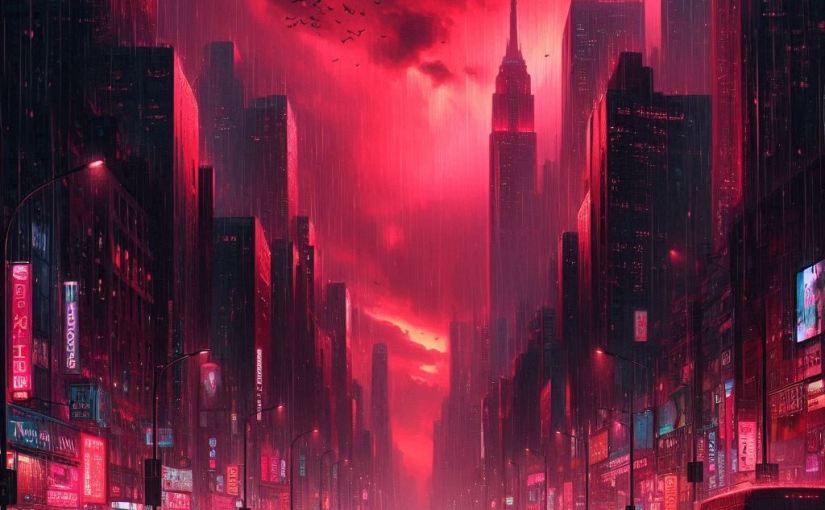
Wadi Qelt¹

We can’t get pass the uncanny valley²,
So that we’re back at where we started
It’s a long way to go back—yet a step forward
Darkness awaits us on both ends
It’s been with us along the path
It’s just that our pupils adapted

An ouroboros³, it’s the valley
Hope here, a timid light
that hardly wounds the darkness
No flashlight to reveal the path
So we freeze at where we are
Facing death, personified in our image


1. the “valley of the shadow of death”; 2. a psychological and aesthetic phenomenon where a person feels uneasy or disgusted when a non-living object looks or behaves too much like a human; 3. an ancient symbol depicting a serpent or dragon eating its own tail.

How Music and Poetry Sustain My Well-Being

What would your life be like without music?

A mistake. Now, that is not to say that my life is a hit (with music).

Of course, you are completely entitled to dislike music—although I have yet to meet someone who actively does.

As you read my poems here, you might not realize just how deeply passionate I am about music—more than poetry, even. I’m drawn to many other forms of art, of course. As I often say, “art still thrills me.”

However, producing music demands a significant investment, and I refuse to take the easy, artificial route. It’s more accessible and affordable than ever to create average and artificial music these days. But poetry? Poetry has always been far more accessible (and affordable) than music. And relying on AI for it feels even less justifiable than for music. Of course, one can use AI just as we use writing prompts, for instance. AI can assist, but it should never replace authentic creative expression.

The process of writing poetry is more immediate, whereas music involves a more layered approach, with multiple stages such as composing, recording, mixing, and mastering.

Writing poetry keeps me sane while I navigate the financial limits that prevent me from producing music the way I envision. With poetry, I can express my soul freely—”pen and paper” are all I need, a medium that has always been affordable, and always will be.

I can express myself more fully through music than through poetry, although I strive to master poetry with the same dedication as I do music. It just so happens that music is my ultimate passion, offering a freedom of expression that feels more universal than poetry.

I plan to explore music more on this blog in the near future, mostly by sharing song lyrics, but also occasional performances and finished works. Let’s see what the future holds.

An Exciting Childhood. Oh, wait

What TV shows did you watch as a kid?

A very few, if any, that I could persuade my mother to let me watch, instead of her soaps or the like. And being limited to broadcast TV, we only had four or five channels, so…

I remember watching Ed, Edd n Eddy and Doug, for instance. But it could be that I actually watched them a little older; aphantasia affects my memory recall a bit. Oh yeah, what an exciting childhood…

Anime shows: Saint Seiya, Yu Yu Hakusho, Dragon Quest: The Adventure of Dai, Legend of Heveanly Sphere Shurato, and Dragon Ball Z.

I first watched Dragon Ball Z with my cousins at my aunt’s house.

Red Sky

Gazing at this crimson sky,
— it seems a mirror —
Of the blood-soaked earth,
Spoils of that war…

And the rain is precipitated
It can hardly wait to fall…
Washing the soil,
like cleaning a sidewalk,
that dirties as it dries.


Adapted from:

Céu vermelho

Olhando, este céu vermelho
— parece espelho —
Do sangue desta terra,
Espólio dessa guerra…

E a chuva precipita-se,
Mal espera pra cair…
E lava o solo,
como quem lava a calçada,
que suja-se ao passo que seca.

How I Format Poetry with inline CSS

Poetry looks beautiful in books, but how does it fare on websites?

To date, we haven’t found a sensible way to format poetry online. What do we do when our verses are so long that they spill over to the next line? How do we visually cue the reader that the continuation is part of the same verse and not a new one? We solve this by indenting the overflow to the right. That’s what’s called hanging indent. Read https://epubsecrets.com/well-hung-poetry-ebooks-and-indents-part-one.php for additional context.

General guidelines suggest using the <p>
tag for paragraphs and the <br> tag to break the paragraph into verses when formatting poetry with CSS. However, here I use the <span> tag for verse separation instead of the <br> as it provides more freedom to style the verses.

For the desired effect, I use three CSS properties: ‘padding-left’ and ‘text-indent’ for the <p> tag and ‘margin-left’ for the <span> tag. Here, I apply 3em of space.

The ‘padding-left’ property sets the space between the content and the left border, while the ‘text-indent’ specifies the indentation of the first line in a text-block. I then use the ‘margin-left’ to indent the other lines of the text-block.

To illustrate how the css code would look:

<h2>So you sit to write</h2>

<p style=”padding-left: 3em; text-indent: -3em;”>You are well versed on how this single verse works
<span style=”margin-left: -3em;”>An added verse and that’s a whole nother story</span>
<span style=”margin-left: -3em;”>These ‘oneliners’ need to talk to each other</span>
<span style=”margin-left: -3em;”>At times they just need to listen to themselves</span></p>

This produces the following output:

So you sit to write

You are well versed on how this single verse works
An added verse and that’s a whole nother story
These ‘oneliners’ need to talk to each other
At times they just need to listen to themselves

I recommend reading this in a browser (that’s where you should read this blog) to see how it works, and avoid using the Jetpack app reader. Otherwise, my verses might lose impact because I vary the way I structure them, and you might miss the clear separation scheme I intended for a particular poem. Sometimes, they might even look messy due to the app’s built-in styling choices.

If you’re on a mobile device, I suggest you try portrait and landscape page orientation to see how it affects the reading experience. As long as you read in a browser, it should look fine both ways.

I’d love to hear your thoughts on how poetry formatting works best for you online. Your feedback is invaluable in refining these approaches and making poetry more accessible and engaging in the digital realm.

Feel free to leave a comment and join the conversation!